
FBAR Reporting in 2025: How to Get Started?
If you have bank accounts outside the U.S., you must do FBAR reporting in 2025. Many ask, What is FBAR reporting? Simply, FBAR (Foreign Bank Account Report) means telling the U.S. Treasury about your foreign accounts. This helps the government track money held abroad and make sure tax laws are met.
In this blog, we will guide you through all you need to know about Foreign account reporting in 2025. Whether you are new to FBAR filing or want to learn about the latest changes, this guide will make the process clear and easy to follow.
What is FBAR Reporting and Why It Matters
What is FBAR Reporting?
FBAR reporting is required for anyone who owns or can sign for foreign bank accounts or assets. You must file if your total foreign accounts go above $10,000 at any time in the year. The FBAR form is called FinCEN Form 114. You file it online with the Treasury.
Why it Matters?
Foreign account reporting helps the U.S. stop tax evasion and money crime. If you don’t file right, you may face big fines or jail. Knowing about FBAR and filing on time keeps you safe from trouble.
Who Must File an FBAR?
Not all people must file FBAR. These groups must file:
- U.S. citizens and residents with foreign accounts over $10,000 total in the year
- Businesses, trusts, and estates with foreign accounts over the limit
- Anyone who can sign on foreign accounts that meet the limit, even if they do not own them
If you fit any of these groups, you must file an FBAR.
Understanding FBAR Filing Rules
Filing FBAR means sharing details about your foreign accounts. This includes:
- The bank or firm name
- The account number
- The highest account value in the year
- The type of account (bank, stocks, funds, etc.)
- The country where the account is held
Remember, you must report all accounts if their total value goes over $10,000. Leaving out accounts or giving wrong details can cause fines or delays.
Important Deadlines for FBAR Reporting
Deadline Type | Date | Notes |
Regular FBAR Deadline | April 15 | File by this date to avoid issues |
Automatic Extension Date | October 15 | Extra time if you miss April 15 |
Filing Tips | — | File early to avoid stress/errors |
Penalties for Late Filing | — | Fines apply if no valid reason |
How to Prepare for Foreign Account Reporting
Getting ready to file your FBAR may seem hard. But it gets easy if you follow these simple steps:
1. Gather Your Account Information
Collect all details about your foreign accounts. This means the bank names, account numbers, and the address of each institution. Include all accounts you control or own, even if the balance was small.
2. Check the Account Balances
Look at your bank statements to find the highest amount in each account during the year. The total of these amounts decides if you must file your FBAR or not.
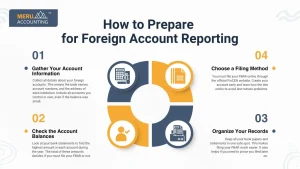
3. Organize Your Records
Keep all your bank papers and statements in one safe spot. This makes filing your FBAR much easier. It also helps if you need to prove you filed later on.
4. Choose a Filing Method
You must file your FBAR online through the official FinCEN website. Create your account early and learn how the site works to avoid last-minute problems.
Being organized saves time and reduces errors in your FBAR filing.
Common Challenges in FBAR Filing and How to Avoid Them
Foreign account reporting can be tricky. These are frequent problems and ways to solve them:
Missing Accounts
Many forget to include some foreign accounts, especially joint ones. Check all your financial records to make sure every qualifying account is listed on your FBAR report.
Wrong Account Numbers
Errors in account numbers cause delays. Use the exact numbers from your bank statements to avoid mistakes and keep your filing smooth.
Late Filing
Penalties come if you file late. Set reminders before April 15 and use the automatic extension to October 15 if you need more time.
Currency Conversion Errors
FBAR amounts must be reported in U.S. dollars. Use the official yearly exchange rate to convert your foreign amounts, not your estimates.
Filing Confusion
FBAR is different from Form 8938. Know when to file each to avoid duplicate or missed reports and keep your filing clear.
If you’re unsure about any step, getting help can save you from penalties later.
Recent Changes in FBAR Reporting Rules for 2025
In 2025, the core rules of FBAR reporting remain the same. But there are small updates that could affect how you file:
Improved Electronic Filing System
The 2025 system is easier to use with better steps and checks. This makes filing faster and cuts down on errors for all users.
Stricter Penalties for Willful Non-Compliance
If you purposely skip or lie on your FBAR, the fines are bigger now. The IRS is more active in catching these cases.
Clearer Guidance on Account Reporting
New rules help you know how to report joint accounts and foreign trusts. This makes the process less confusing for complex cases.
Stay updated on these changes to ensure your FBAR filing is correct and complete.
Best Practices for Accurate Foreign Account Reporting
To stay compliant and avoid issues with your reporting, follow these tips:
Start Early Each Year
Collect your account info right after the year ends. Starting early helps you avoid rushing and missing important details.
Keep Clear Records of All Accounts
Track all your foreign accounts and balances throughout the year. This saves time and makes filing easier.
Use the Official FinCEN BSA E-Filing System
File your FBAR only on the official FinCEN website. Avoid other sites to make sure your filing is accepted.
Consult a Tax Professional When Needed
If your money is complex, get help from an expert. They will guide you and help you avoid big mistakes.
Double-Check All Data Before Filing
Look over your FBAR with care. Check all numbers and facts to stop errors or fines.
Keep Copies of Your Filed Forms
Always save a copy of your FBAR and all related papers. This helps if you need proof later or want to fix problems after filing.
Stay Updated on FBAR Rules
Rules can change each year. Check the FinCEN site or trusted sources often to know the latest FBAR rules and avoid errors.
Use Trusted Currency Rates
When you change foreign cash to U.S. dollars, use official yearly rates. This keeps your report true and stops mistakes in your FBAR.
Following these practices makes the FBAR filing process smoother and worry-free.
FBAR reporting can be hard, especially if you have many foreign accounts or complex money matters. At Meru Accounting, we guide you at each step of FBAR filing. Our professionals make sure your reports are right, full, and on time to help you avoid fines. With Meru Accounting, you get service made just for you. Whether you file for the first time or update old reports, we make FBAR easy and calm.
FAQs
- What is FBAR reporting?
FBAR means telling the U.S. about your bank accounts outside the U.S. when the total is more than $10,000. - Who must file an FBAR?
You must file if you are a U.S. citizen or resident and have foreign accounts that add up to over $10,000 at any time in the year. - When is the FBAR deadline?
The deadline is April 15 each year. You get a free extension to October 15 if you need more time. - How do I file my FBAR?
You file your FBAR online on the official FinCEN site using the BSA E-Filing system. - What accounts should I report?
Report all foreign bank, securities, and financial accounts if their total value goes over $10,000 at any time during the year. - Is FBAR the same as Form 8938?
No. FBAR is for foreign bank accounts. Form 8938 is for foreign assets on your tax return. You may need to file both. - What if I miss the FBAR deadline?
You may face fines. But you can use the October 15 extension to avoid late penalties. - Can I file FBAR myself, or do I need help?
You can file on your own if your accounts are simple. For many accounts or trusts, it’s best to get help from a tax pro.