
Practical Accounting and Bookkeeping Tips For Non-Profits
A non-profit group is still, at its core, a business. These groups must follow laws and meet rules just like any for-profit firm, and bookkeeping tips for non-profits can help them stay on track.
Most non-profit leaders focus their time on goals tied to service or cause. Yet, clear and sound records are key. Learning a few bookkeeping tips for non-profits can help leaders manage their books better.
Unlike for-profit firms that chase sales, non-profits must show how funds and assets are used to support public or social goals.
Non-profit accounting needs a set way of tracking, reporting, and managing funds. It uses set terms and classes to log actions and funds. These reports help donors see how their money is spent. In this post, we’ll share smart bookkeeping tips for non-profits and nonprofit accounting best practices to help you stay clear, honest, and in good standing.
Why Accounting Is Important for Non-Profits
- Non-profits must follow laws and rules.
- Accurate books help in audits and grant applications.
- Donors expect reports on how money is used.
- Accounting shows how resources are managed.
- It helps in planning and decision-making.
Bookkeeping Tips for Nonprofits
- Make a Yearly Operating Budget
One of the key bookkeeping tips for non-profits is to plan a yearly budget. All groups—profit or not, should build a working budget each year.
Set a real and useful budget you can stick to. It should match your goals and known costs. Still, know that budgets need to change. As your work grows or shifts, you may spend more on some goals or cut in other areas. A flexible budget lets you respond to real needs while staying on track.
- Staff Should Follow Policy and Ethics
Another nonprofit accounting best practice is to ensure your team works with ethics and in line with your rules.
Many non-profits have lost trust due to the misuse of funds by team members. To avoid this:
- Do background checks on all new hires and interns.
- Set a clear, written code of conduct.
- Keep your financial rules strong.
- Ask for proofs like bills and receipts for all costs.
This builds trust and keeps your books clean.
- Use Clear Language for Reports and Events
In non-profit books, it’s key to use clear and correct words. This helps others—like donors, board members, and auditors—read your reports with ease.
The statement of activities shows how donor funds are used. It breaks down costs tied to services, events, or outreach. Using precise terms helps all parties track money with ease. This is one of the top bookkeeping tips for non-profits who want full trust and support.
- Maintain a Clean and Clear Ledger
A detailed ledger is your best tool in tracking funds. Every cent in or out must be logged. This record helps with tax prep, grants, and audits.
Keeping a good ledger is one of the top bookkeeping tips for non-profits. It meets admin needs and builds faith with all donors and partners.
- Keep Records Updated and File Taxes on Time
A long-term plan is one of the best nonprofit accounting best practices. Plan for where your group is going, not just where it is now.
Nonprofit Accounting Best Practices
Following these nonprofit accounting best practices helps your organization stay strong and efficient.
1. Use Fund Accounting
- Fund accounting tracks money by purpose.
- Each fund has its own income and expenses.
- It shows how donations are used.
2. Separate Personal and Business Finances
- Never mix personal and nonprofit funds.
- Open a separate bank account.
- Keep clean records for all money.
3. Use the Right Software
- Choose software for non-profits.
- It should support fund accounting.
- Look for tools like QuickBooks Nonprofit or Aplos.
4. Track Every Donation
- Record every donation properly.
- Add donor details and donation purpose.
- Send receipts to donors for tax purposes.
5. Record In-Kind Donations
- In-kind means non-cash gifts like goods or services.
- Note the fair market value.
- Log these in your books with proper notes.
6. Reconcile Bank Accounts Monthly
- Match your bank statements to your records.
- Do this every month.
- It helps find errors early.
7. Follow a Budget
- Plan your income and expenses.
- Compare actual numbers with the budget.
- Adjust plans if needed.
8. Prepare Monthly Financial Reports
- Create simple financial statements.
- Share reports with the board.
- Helps everyone stay informed.
9. Classify Expenses Correctly
- Use categories like program, admin, and fundraising.
- This shows how funds are used.
- Helps with transparency.
10. Keep Backup Records
- Save digital and paper records.
- Keep them safe and organized.
- Helps in audits and reviews.
Key Reports Every Non-Profit Should Use
Clear reporting is a key part of nonprofit accounting best practices. It keeps your finances clean and builds trust.
1. Statement of Financial Position
This is like a balance sheet. It shows your assets, debts, and net assets. It helps non-profits see their true worth at a glance.
2. Statement of Activities
This shows income and expenses over a period. It highlights gains or losses. It gives a full view of how well your group uses its funds.
3. Statement of Functional Expenses
This breaks spending into admin, program, and fundraising. It helps meet grant needs and is a top bookkeeping tip for non-profits.
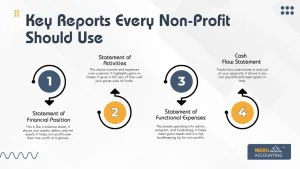
4. Cash Flow Statement
Tracks how cash moves in and out of your accounts. It shows if you can pay bills and meet goals on time.
Common Mistakes to Avoid
Avoiding errors is part of smart bookkeeping tips for non-profits. These missteps can hurt your mission.
1. Mixing Personal and Non-Profit Funds
Keep your group’s money in a separate account. Mixing funds breaks trust and may cause legal trouble.
2. Not Tracking Restricted Funds
Donors may set limits on how their funds are used. Failing to track them breaks core nonprofit accounting best practices.
3. Failing to Reconcile Accounts
Reconcile bank and book records every month. This stops fraud and helps catch early errors.
4. Ignoring Small Expenses
Small costs add up and can ruin your budget. Track even tiny amounts for full clarity.
5. Missing Tax Filings and Deadlines
Late forms like the 990 can cost you your status. Timely filings are key to staying tax-exempt.
How to Stay Audit-Ready All Year
Audits are easier when you follow nonprofit accounting best practices. Stay ready all the time, not just at year-end.
1. Keep Clean and Updated Books
Log every income and cost without delay. Clean books show your group is well-run.
2. Save Receipts and Financial Records
Back up your spending with real proof. Save paper or digital copies in one spot.
3. Organize by Category and Fund
Sort by type (admin, program) and source (grants, donors). This helps show how you use restricted funds.
4. Perform Regular Internal Reviews
Review your books monthly or at least each quarter. Internal checks are top bookkeeping tips for non-profits.
5. Get Board Approval for Big Changes
Any large financial change must be approved. This adds a layer of trust and control.
Benefits of Strong Non-Profit Accounting
Good records do more than meet legal rules. They support growth and trust.
1. Builds Trust with Donors and Sponsors
Donors want to know how their money is used. Strong books prove that you spend funds right.
2. Helps Raise More Money
Reports make it easier to win grants and gifts. It shows that your group is well-managed.
3. Makes Grant Reporting Easier
Grants often need proof of how money was spent. Accurate books mean faster grant reports.
4. Reduces Financial Risks
You spot errors, theft, or fraud early on. That’s why nonprofit accounting best practices matter.
5. Guides Better Decisions
Data-driven plans work better than guesses. It helps leaders set goals with real numbers.
Tools That Help Non-Profit Bookkeeping
Good tools are part of all solid bookkeeping tips for non-profits. They save time and reduce errors.
1. QuickBooks for Nonprofits
This version includes fund tracking and donor tools. It’s trusted by many medium to large groups.
2. Aplos
Built for non-profits with features like donation logs. It supports nonprofit accounting best practices.
3. Wave Accounting
Great free tool for small teams with low budgets. It helps you track income and costs with ease.
4. Xero
Cloud-based and links to your bank. It offers reports that help during audits.
Roles Involved in Non-Profit Accounting
Each person has a role in good financial health. No one should do it all alone.
1. Bookkeeper
They record daily money moves. They are key to keeping books up to date.
2. Accountant
They prepare reports and check records. A pro in charge supports nonprofit accounting best practices.
3. Treasurer
Often from the board, they oversee finances. They help plan budgets and watch cash flow.
4. Board Members
They approve plans and review reports. Good boards ask the right financial questions.
Tips for Small Non-Profits
Even the smallest non-profits need clean books. These tips keep things simple.
1. Start with Simple Tools
Spreadsheets work if you can’t afford software. It’s a basic but valid bookkeeping tip for non-profits.
2. Track Every Dollar
Log all gifts, grants, and costs right away. Missed entries can mess up your year-end report.
3. Train One Staff Member
One trained person is better than none. They can teach others and spot issues.
4. Review Finances Monthly
Set a date to go over income and costs. Monthly checks help catch problems early.
Year-End Checklist for Non-Profits
Closing the year right is part of nonprofit accounting best practices. It sets the tone for the year ahead.
1. Reconcile All Accounts
Bank and book totals must match. This proves your books are complete.
2. Review and Close Books
Lock the year once all checks are done. Final books help prepare tax reports.
3. Prepare Donor Statements
Send receipts to help with donor taxes. This builds trust and repeat gifts.
4. File Tax Forms
Form 990 and state filings are due. Use this step to follow tax laws.
5. Plan Next Year’s Budget
Use real data to forecast next year. A good plan is key to growth and grants.
Simple Budgeting Tips for Non-Profits
Budgeting well is a major part of bookkeeping tips for non-profits. A good budget avoids stress and waste.
1. List Expected Income and Costs
Start with what you know you’ll get and spend. Add past numbers for more accuracy.
2. Add a Buffer for the Unexpected
Leave room for surprise costs or delays. It keeps your budget from falling short.
3. Update the Budget if Needed
Check and adjust your numbers often. Flexibility is part of smart planning.
4. Share with the Team
Let all staff and board members see it. Team goals need team access to the plan.
How to Train Non-Profit Staff in Accounting
Even short training helps your team improve. Everyone should learn the basics.
1. Offer Workshops or Online Classes
Free or low-cost options are easy to find. These boost your team’s confidence and skills.
2. Use Software Training Tools
Most tools have built-in guides or videos. This is a key bookkeeping tip for non-profits.
3. Cross-Check Work
Review each other’s entries for accuracy. Two sets of eyes help catch mistakes.
4. Define Financial Duties
Know who handles what part of the books. Clear roles help avoid overlap and gaps.
When to Outsource Non-Profit Bookkeeping
Sometimes, hiring help is the best step. It frees up your team for core tasks.
1. If Your Books Are Often Late
Outsourcing brings professional help and quick work. Timely books follow nonprofit accounting best practices.
2. When Grants Require Expert Reports
Grants often need detailed data. A pro accountant can build those fast.
3. When You Grow Fast
More growth cause more transactions to track. A small team may not keep up.
4. If Tax Filings Get Complex
IRS rules can be hard to follow. An expert ensures your forms are right.
Using nonprofit accounting best practices is not just about legal needs—it builds trust, improves planning, and boosts growth. By following simple bookkeeping tips for non-profits, even small teams can stay on top of their finances. Keep things clean, simple, and timely, and your non-profit will be ready for growth, grants, and success.
At Meru Accounting, we offer custom bookkeeping and accounting help for non-profits of all sizes. Our team keeps your books clean, clear, and in line with all rules. From fund tracking to grant reports and audit prep, we help you stay on track all year. With Meru Accounting, you get a trusted team that helps your group grow and stay strong.
FAQs
- Why is fund accounting important for non-profits?
It tracks money by use and donor rules. - What is the best bookkeeping tip for small non-profits?
Start now and log every cost and income. - Do non-profits need to file taxes?
Yes, with Form 990 or other required forms. - Can non-profits use free accounting tools?
Yes, Wave and others offer free tools for small groups. - Why separate personal and non-profit funds?
It avoids confusion and keeps you safe from tax issues. - How often should non-profits reconcile accounts?
Every month is best for clear, clean books. - What happens if a non-profit fails to maintain proper books?
You may face audits, lose donors, or get fined.