
Paycheck Protection Program: How It Helped Firms Guard Their Funds
The Paycheck Protection Program (PPP) was a lifeline for many firms in hard times. It aimed to protect money and help keep staff on payroll. Small and medium businesses faced cash flow issues when sudden drops in income occurred. The PPP gave loans to cover key costs and pay employees.
This program helped firms survive while they focused on daily work without extra money stress. Businesses could keep running and pay rent, bills, and other costs. The PPP was key to keeping workers stable. It gave owners the confidence to run their firms in tough times.
What Is the Paycheck Protection Program?
The Paycheck Protection Program is a federal initiative that offers loans to small businesses. The program’s main goal is to help businesses pay their workers during tough times.
Key points:
- Loans can cover salaries, rent, and utilities.
- Some or all of the loan can be forgiven if used correctly.
- It is designed to keep businesses running and employees employed.
How the Paycheck Protection Program Worked
The Paycheck Protection Program (PPP) gave small firms the support they needed.
It helped them stay open and cover costs during hard times.
- Maintaining Employee Payroll
PPP funds helped businesses pay their employees on time.
This kept staff loyal, focused, and confident in their work. - Covering Operational Costs
Firms could use PPP loans to pay rent and bills.
It stopped late fees and kept daily operations smooth. - Loan Forgiveness Option
Businesses could get loans fully forgiven if used correctly.
This cut debt pressure and helped firms recover fast. - Quick Access to Funds
PPP gave fast cash to businesses facing urgent needs.
Quick access helped avoid closures and flow problems.
How Businesses Used the Paycheck Protection Program
The Paycheck Protection Program (PPP) gave businesses vital relief. It helped firms cover costs and keep staff during the crisis.
1. Paying Salaries and Wages
PPP funds allowed businesses to pay employees without delays. Timely wages kept teams motivated and ensured smooth daily work.
2. Covering Rent and Utilities
Firms used PPP to cover rent and essential utilities. This support prevented evictions and avoided costly service disruptions.
3. Paying Debt and Other Obligations
PPP funds helped businesses meet supplier bills and debt payments. This preserved trust with partners and maintained financial credibility.
4. Protecting Cash Flow
The program eased pressure by supporting stable business cash flow. Firms avoided extra loans and reduced financial strain overall.
5. Retaining Key Talent
Businesses kept skilled staff instead of costly layoffs. Retention ensured expertise, service quality, and smooth client support.
6. Funding Operational Adjustments
PPP enabled firms to upgrade systems and embrace online tools. These changes helped them adapt and serve customers better.
7. Building Stability for Recovery
The program gave firms a cushion for future planning. This financial stability encouraged growth once markets began recovering.
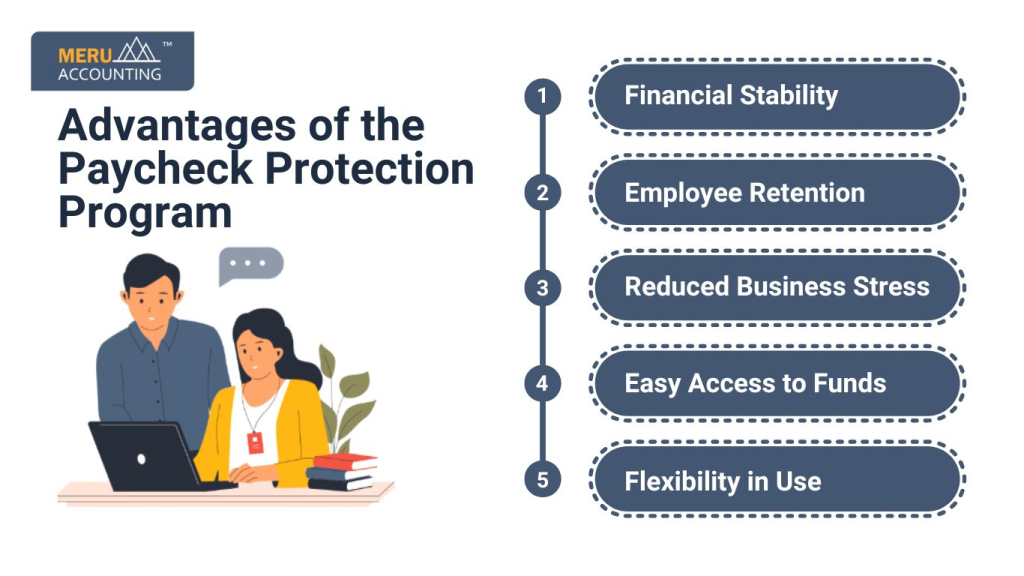
Advantages of the Paycheck Protection Program
The Paycheck Protection Program (PPP) delivered strong relief for small and medium-sized businesses. It gave firms a way to stay steady while facing tough economic shocks. Many owners relied on this program to support their people and protect operations.
1. Financial Stability
PPP loans gave firms short-term security during economic disruption. Owners paid bills and planned growth without fear of collapse. Stability helped firms focus on strategy instead of constant survival.
2. Employee Retention
Payroll support helped companies retain skilled and trusted workers. Employees stayed loyal and productive without layoffs or pay cuts. This kept operations smooth and reduced costly rehiring later.
3. Reduced Business Stress
PPP eased stress for business owners during hard periods. Leaders made stronger choices when money worries were reduced. This improved day-to-day focus and boosted overall efficiency.
4. Easy Access to Funds
PPP loans were faster and simpler than standard bank credit. Quick approvals helped firms address urgent needs without delay. Access to funds made survival more realistic and possible.
5. Flexibility in Use
PPP funds covered payroll, rent, utilities, and debt costs. Owners directed money toward the most urgent business needs. This flexibility gave firms room to adapt and recover.
Challenges Faced While Using the Paycheck Protection Program
The Paycheck Protection Program (PPP) was a key support for small firms. It helped owners cover payroll and basic costs during tough times. Yet, despite its benefits, many firms faced hurdles while using it.
1. Complex Application Process
The application forms were long and hard to fill. Even minor errors slowed down loan approval for many firms. Owners often needed expert help to handle the paperwork.
2. Loan Forgiveness Rules
Firms had to follow strict rules to get forgiveness. Improper use of funds could turn loans into debt. This added stress for owners already under pressure.
3. Limited Awareness
Not all firms knew about the program in time. Some missed the chance due to poor outreach or late news. Better guidance could have helped more businesses apply.
4. Short-Term Relief Only
PPP gave funds for a short time, not long-term growth. Businesses still needed plans for lasting recovery. Owners had to think beyond PPP to stay secure.
5. Unequal Access to Funds
Large firms often get quick access through strong bank ties. Small firms struggled with delays and weak support. This gap made relief feel unfair to many owners.
6. Constant Policy Changes
Rules for PPP kept changing during the crisis. Business owners had trouble tracking the new updates. This caused stress and confusion about compliance.
7. Limited Coverage of Expenses
PPP focused on payroll and basic bills only. It did not cover growth costs like tech or upgrades. Firms had to seek other funding to stay afloat.
Impact of the Paycheck Protection Program
The Paycheck Protection Program (PPP) had a lasting effect on small firms. It was not just quick help but a plan that shaped survival and growth. Through its reach, PPP supported owners, employees, and local trade alike.
1. Prevented Layoffs and Job Losses
PPP helped firms keep staff during hard times. It kept wages flowing when sales dropped fast. This step saved many jobs and supported families.
2. Supported Local Economies
Open firms meant strong local trade and cash flow. Vendors, shops, and service firms gained steady sales. The ripple kept towns and cities more stable.
3. Maintained Employee Trust and Engagement
PPP ensured paychecks came on time each month. Staff felt safe and loyal despite tough markets. This trust raised morale and kept work steady.
4. Offered a Lifeline to Cash-Strapped Firms
Many firms lacked funds to face sudden shutdowns. PPP loans gave fast cash for rent and bills. This lifeline saved countless firms from closing doors.
5. Encouraged Better Financial Planning
PPP showed firms the need to plan ahead. Owners tracked cash flow and watched key costs. These habits built stronger and more ready firms.
Tips for Businesses Using the Paycheck Protection Program
The Paycheck Protection Program (PPP) gave small businesses crucial support. Using the funds wisely helped protect jobs and keep operations running.
- Keep Accurate Records
Track every payment and receipt carefully. Clear records make audits simple and prevent errors. - Prioritize Payroll
Pay employees first to meet PPP rules. This keeps staff happy and eligible for forgiveness. - Plan for Expenses
Cover rent, utilities, and insurance first. Make sure funds go to essential business needs. - Consult Financial Experts
Ask accountants for guidance on using funds. Experts can help maximize benefits and avoid mistakes. - Monitor Deadlines
Watch PPP deadlines closely to avoid fines. Use reminders to submit all forms on time.
Why Businesses Should Consider Similar Programs
The success of the Paycheck Protection Program shows support matters. Such programs help firms survive hard times and plan ahead. They offer a clear path to manage sudden revenue loss. Businesses can maintain steady work and keep serving clients.
Essential Safety Nets
These programs give money to cover key costs quickly. Businesses can pay bills and keep operations running.
Lower Closure Risk
Support lowers the chance of permanent business shutdowns. Firms can keep serving clients while fixing finances.
Boost Employee Loyalty
Funds help keep workers employed and reduce layoffs. Staff feel valued, boosting trust and long-term loyalty.
Operate Without Debt
Businesses can cover costs without costly loans or credit. This leaves more money for growth and expansion.
Plan for Growth
Programs let leaders focus on growth and smart budgets. Companies can invest in upgrades while planning ahead.
The Paycheck Protection Program gave businesses a vital lifeline. It helped cover payroll, expenses, and stabilize cash flow. Many firms retained staff and avoided financial collapse.
At Meru Accounting, we help businesses understand programs like the PPP. Our experts ensure proper documentation and full compliance for benefits. We also guide clients in managing funds for long-term stability. With Meru Accounting, firms navigate financial challenges with confidence and focus.
The PPP highlighted the value of careful planning and support. Using such programs, businesses can protect funds and maintain operations. They gain stability while facing unexpected financial events.
FAQs
Q1: Who is eligible for the Paycheck Protection Program?
Small businesses, sole proprietors, and self-employed individuals are eligible.
Q2: Can PPP loans be forgiven?
Yes, full or partial forgiveness is possible if funds are used properly.
Q3: What expenses are covered by PPP?
Payroll, rent, mortgage interest, and utilities are covered.
Q4: How quickly can a business get PPP funds?
Funds are usually available within a few days to weeks.
Q5: Do I need a financial advisor for PPP?
Consulting a professional helps ensure compliance and forgiveness eligibility.
Q6: Is PPP available for all businesses?
Only eligible small businesses and specific nonprofit organizations can apply.
Q7: Can PPP funds be used for marketing or new investments?
No, PPP funds must be used for approved operational expenses.