Risk Management and Compliance in Rental Property Management Accounting
Managing rental properties involves handling both money and responsibility. Property managers must control income, expenses, and all payment records. Rental property management accounting helps them stay organized and compliant with rules. It reduces errors, improves financial clarity, and keeps property operations smooth.
Every property business faces risks such as fraud, data leaks, or missed payments. Good risk management prevents these problems before they grow. Compliance keeps your property work legal and stress-free. When both work together, property accounting becomes strong, secure, and transparent.
Understanding Rental Property Management Accounting
Rental property management accounting means recording income and spending for rentals. It tracks rent, bills, and vendor payments in one system. This ensures every financial activity is clear and traceable.
It helps property managers maintain trust and prevent confusion between owners and tenants.
Why is it Important
Accurate accounting shows the true financial health of properties. It reduces errors and builds a clear view of profits. Well-kept records also make audits easier to complete. Good accounting practices save time and support business growth.
Role of Risk Management
Risk means the chance of something going wrong. In rental property management accounting, risks may include wrong entries or lost records. Handling these early prevents loss and confusion.
Every property business must learn to find and fix possible risks.
Why is it important
Risk management keeps finances safe and predictable. It helps managers act before small problems become serious. Proper control systems protect owners from penalties. When risks are managed, property accounting stays stable and reliable.
Main Compliance Areas in Property Accounting
1. Legal Compliance
In rental property management accounting, property managers must follow all local and national laws. Rules may differ based on the state or city. Keeping updated records ensures legal safety.
Breaking these rules can lead to big fines and loss of trust.
2. Tax Compliance
All rental income and expenses in rental property management accounting must be recorded for taxes. Each property’s returns must be filed on time. Correct entries prevent tax penalties and errors.
Tax compliance keeps the business legal and financially healthy.
3. Lease Agreement Compliance
In rental property management accounting, every lease must follow fair and legal terms. Rent dates, deposits, and renewals should match written contracts. Keeping copies of all agreements is vital. Following lease laws helps avoid disputes and complaints.
4. Data Protection Compliance
In rental property management accounting, tenant and financial data must stay private and safe. Use secure software and limit data access. Strong passwords and backups prevent theft. Safe data management protects both owners and tenants from risks.
Building a Risk Management Plan
Step 1: Find Risks
List all risks that can harm property finances. These include missed rent, fake bills, or software errors. Knowing risks helps prevent future losses.
Regular review of weak areas makes risk plans stronger.
Step 2: Study Each Risk
Rate each risk by how big its effect could be. Some may cause small delays, others heavy losses. Focus more on risks that can damage cash flow.
This helps you plan which issues to fix first.
Step 3: Create Control Rules
Build clear rules for payments, approvals, and audits. Assign duties to different people for each task. Cross-checks stop fraud and improve record accuracy.
Written policies make your accounting system strong and reliable.
Step 4: Monitor and Update
Keep track of risks every month or quarter. Review systems when laws or conditions change.
Update your controls to stay safe from new risks.
Regular monitoring in rental property management accounting keeps the process current and secure.
Compliance Best Practices
1. Use Accounting Software
Modern software simplifies financial tracking and reporting. It records payments, rents, and
invoices in real time. Automation reduces mistakes from manual work.
Software also saves time and boosts reporting accuracy.
2. Keep Detailed Records
Each transaction should have proof, like receipts or bills. Records must be easy to find when
needed. Clear documentation helps during audits or disputes.
Good record systems build strong financial transparency.
3. Review with Regular Audits
Audits check for accuracy and rule compliance. They find missing entries or duplicate payments early. A consistent audit plan prevents long-term damage.
Regular audits create discipline and accountability.
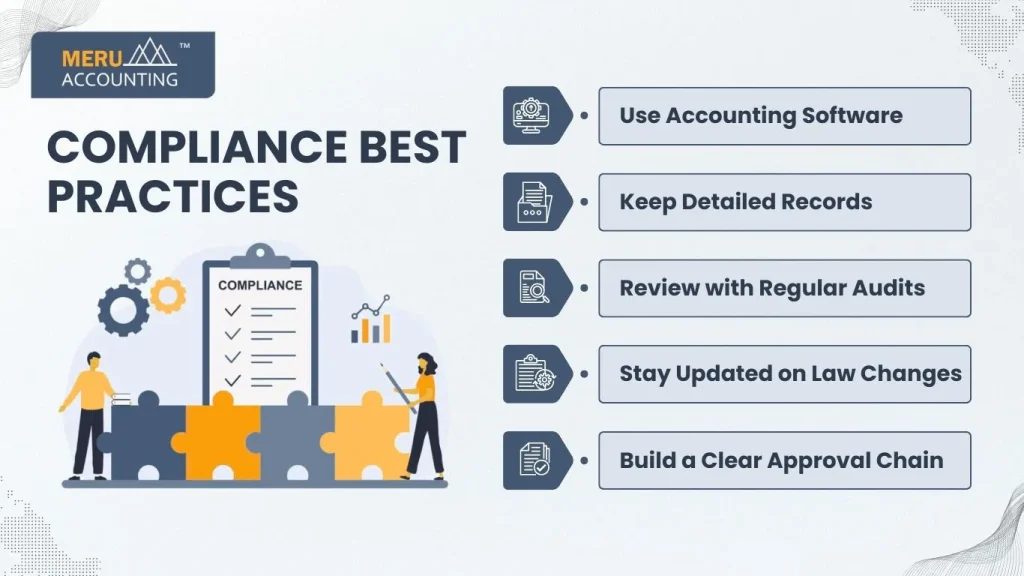
4. Stay Updated on Law Changes
Property laws often change with new government rules. Keep reading updates from official tax and housing sites. Awareness helps you adjust fast.
Updated knowledge ensures that you always follow the law.
5. Build a Clear Approval Chain
Define who approves each type of payment. Use two-step verification for large expenses. Written approval policies stop fraud.
Approval chains reduce confusion and protect your finances.
Common Accounting Risks in Rental Property Management
1. Missed or Late Payments
Missing rent or vendor payments hurts cash flow. Set reminders for due dates and track rent daily. Payment tracking tools help reduce this risk.
On-time payments improve relations and keep cash steady.
2. Fake or Wrong Entries
Fraud or wrong data leads to big losses. Check invoices and receipts before posting them. Regular reviews catch fake entries early.
Accurate review systems build trust and prevent loss.
3. Incomplete Financial Reports
Errors in reports mislead owners and investors. Review financial statements before sending them out. Use templates for uniform reporting.
Clean reports show real progress and ensure clarity.
4. Cash Shortages
Poor expense control may lead to sudden cash gaps. Monitor spending and compare it with income monthly. Set aside funds for emergencies.
Strong budgeting avoids unexpected money problems.
5. Data Theft
Hackers may target property records or payments. Use secure, encrypted software for all financial data. Train staff on online safety.
Safe systems prevent fraud and protect the business image.
Technology in Risk and Compliance Control
1. Cloud Systems
Cloud tools keep data safe and easy to access. They allow remote logins for managers and owners. Real-time syncing ensures accurate records. Cloud systems cut the risk of lost data or errors.
2. Automated Payments
Automation makes rent and vendor payments faster. It removes manual errors and sends alerts for overdue bills. Each payment is logged safely. Automated systems improve accuracy and save valuable time.
3. Audit Trail Features
Audit trails record every edit or entry in the system. They show who changed what and when. This improves accountability and transparency.
Digital trails help in quick review and compliance proof.
4. Data Backups
Regular backups protect files from damage or loss. Save copies in secure cloud storage or drives. This ensures recovery during emergencies. Backup plans keep records safe from accidents.
5. Digital Dashboards
Dashboards show charts, rent trends, and expense totals. They make it easy to read financial health. Managers can act fast based on clear visuals. Reports become easier to explain to owners and investors.
Staff Training for Risk Awareness
1. Short Training Sessions
Train employees about accounting, fraud, and software safety. Short, regular sessions improve awareness and accuracy. Staff learn new rules easily.
Trained teams make fewer mistakes and work faster.
2. Clear Work Policies
Write simple policies about record keeping and approvals. Make these rules visible to all accounting staff. Review them each year.
Clear policies keep the team disciplined and aligned.
3. Internal Checks
Create internal audits every month to find errors. Small reviews help correct mistakes early. Encourage staff to report problems quickly.
Internal control creates accountability and builds confidence.
4. Open Talk Culture
Encourage open communication about mistakes or risks. Let employees share issues without fear. This helps fix errors before they grow.
A positive culture improves honesty and teamwork.
Financial Controls for Risk-Free Accounting
1. Split Responsibilities
Give different tasks to different team members. No one should handle all the money work. This stops mistakes and misuse. Sharing work builds trust and safety.
2. Monthly Bank Checks
Check all bank accounts every month. Match statements with your software. Fix any errors at once. Regular checks prevent fraud and hidden mistakes.
3. Track Expenses
List expenses under repairs, utilities, or taxes. Review these lists weekly or monthly. Find areas to save money. Tracking makes budgets clear and simple.
4. Verify Documents
Check all invoices, bills, and receipts before paying. Store them in digital folders for later use. Verified documents make audits easy and your system strong.
Legal and Ethical Accounting Practices
1. Follow Lease Laws
Follow all rental and tenant rules. Keep copies of contracts and notices. Know the rules for rent and renewal. Following the law stops disputes and keeps tenants happy.
2. Fair Housing Rules
Treat all tenants fairly. Do not discriminate by race, religion, or background. Teach staff this rule. Being fair builds trust and a good reputation.
3. Handle Deposits Safely
Keep deposits in a separate account. Return them after inspection, as the law says. Give clear receipts every time. This makes both sides feel safe and sure.
4. Prevent Money Laundering
Check for large or unusual payments. Verify the source of large sums. Report anything suspicious to authorities. This keeps your business clean and trusted.
Ethics and Transparency
1. Honest Records
Always write the right numbers in your books. Never hide or change them. Truth builds strong trust in business. Being fair helps your company grow and last.
2. Clear Reports
Make reports that are easy to read. Use plain words and show all data. Simple and open reports build trust with owners. Clear work makes you a trusted manager.
3. Wise Spending
Spend only on real business needs. Avoid paying for personal things. Always note each cost with a reason. Smart use of money helps your business grow well.
Managing many properties needs smart accounting help. Experts make sure all records are right and on time. They help save time and cut stress. With them, owners can focus on daily work, not on papers.
Meru Accounting provides full rental property management accounting services. Our team handles books, taxes, and rules with care. We use safe cloud tools for clear and quick reports. Meru’s team helps clients stay safe and follow all laws. Our easy steps make daily money work simple. With Meru Accounting, owners get peace of mind and steady growth. Our world reach brings trusted, modern, and proven accounting help for all property firms.
FAQs
- What is rental property management accounting?
It tracks income and costs for rental properties. It helps keep clean records and avoid money errors. - Why is risk management important in property accounting?
It helps prevent big losses and legal issues. Good risk control keeps property operations smooth. - What does compliance mean in this context?
Compliance means following all rules and laws. It ensures accounting records stay legal and correct. - How can I reduce risks in accounting?
Check all invoices and payments for accuracy often. Use software tools that spot errors and fraud early. - Why are accurate records vital for property managers?
Accurate records help track bills and vendor payments. They show clear data for audits and tax returns. - How can technology help with risk control?
Automation cuts human error and improves data tracking. It ensures all payments and reports are up to date. - What are common compliance risks in accounting?
Late payments, missed taxes, or wrong financial entries. They can cause penalties or harm a business’s reputation. - How often should records be checked?
Review records every month for small errors. Regular checks prevent big mistakes from piling up. - What role does budgeting play in risk management?
A clear budget helps control spending and cash flow. It reduces the risk of shortfalls or unpaid bills. - How can landlords ensure compliance?
Follow tax laws and property payment regulations. Keep all documents updated and well-organized daily. - Why is staff training important in accounting?
Trained staff make fewer mistakes in data entry. They understand legal duties and reporting needs. - What software helps in rental property management accounting?
Use tools like QuickBooks, AppFolio, or Buildium. They automate reports and simplify financial tracking. - How can internal audits reduce risks?
Audits help detect fraud or policy violations early. They ensure accounting practices follow company standards. - What happens if compliance rules are ignored?
Fines, legal cases, and financial loss can occur. Ignoring rules can damage your brand and trust. - How can backup records help reduce risk?
Backup copies protect data from loss or system crashes. They make recovery easy during any unexpected event. - Why is vendor management key in accounting?
Good vendor records ensure timely and correct payments. It avoids disputes and keeps business ties strong. - How does risk management improve tenant trust?
Safe and clear finances build tenant confidence. It shows that the property is run responsibly. - What is the best way to stay compliant?
Follow laws, track payments, and record all details. Update systems often to match new legal changes. - How can reports support compliance efforts?
Reports show all payments and spending in detail. They make audits and reviews simple and fast.