
What Are The Main Types Of Taxes In The USA?
If you earn, spend, or own things in the U.S., you must pay taxes. Knowing the types of taxes in the USA helps people and firms plan well, avoid fines, and follow rules. Taxes fund schools, roads, health, and defense. Clear laws also help you claim cuts, save cash, and avoid fees. In this blog, we explain federal, state, and local taxes in plain words and show how they affect your life and work.
Why It’s Important to Know About Different Taxes in the USA
Taxes are a part of life. From your paycheck to your shopping bill, different types of taxes in the USA affect your daily money flow. Knowing what types you make helps you manage your money. It also keeps you safe from fines and audits.
Types of Taxes in the USA:
Taxable income in the US includes income from self-employment, independent labor, capital gains, wages, profit from the sale of real estate, etc. Your tax liability will also be determined by the state and area in which you live, as different types of taxes in the USA apply based on location. The different tax rates are applicable to different states in the USA.
Federal taxes:
The federal government gets most of its money from federal taxes. The federal tax is directly paid to the Internal Revenue Service. The revenue collected via federal taxes is spent on various essential programs such as education, relief programs, and transportation.
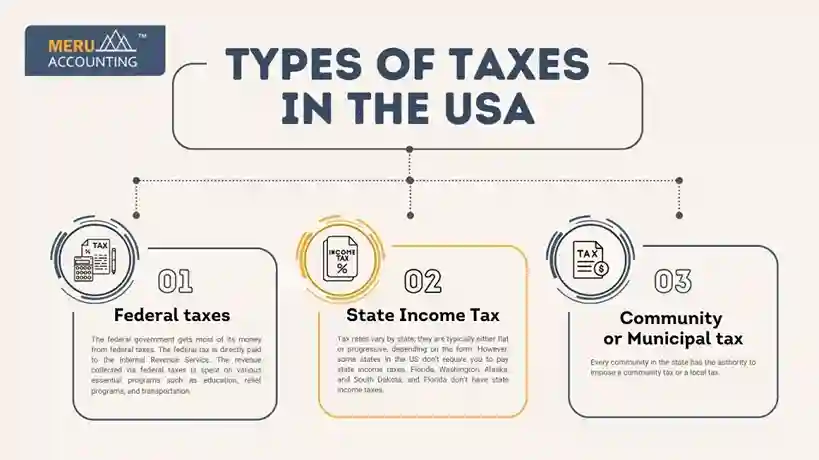
State Income Tax:
Tax rates vary by state; they are typically either flat or progressive, depending on the form. However, some states in the US don’t require you to pay state income taxes. Florida, Washington, Alaska, and South Dakota, and Florida don’t have state income taxes.
Community or Municipal tax:
Every community in the state has the authority to impose a community tax or a local tax.
Types of Federal Taxes in the USA Explained
Federal taxes are collected by the IRS. These are the most common types of federal taxes in the USA that every citizen or business must deal with.
Income Tax
Among the main types of federal taxes in the USA, people and businesses pay income tax directly to the government. You pay more as you earn more. The IRS uses this tax to fund many services like the military, education, and social programs.
Payroll Tax
This is another of the key types of federal taxes in the USA. It is taken from workers’ pay and funds Social Security and Medicare. Employers also pay part of this tax. It helps retired and disabled people and funds healthcare for seniors.
Corporate Tax
If you sell stock or land for a gain, you may owe capital gains tax. The rate is set by how long you owned the item before the sale.
Capital Gains Tax
When you sell something like stocks or real estate for profit, you may pay capital gains tax. The rate depends on how long you held the asset.
Excise Tax
Excise tax is one of the lesser-known types of federal taxes in the USA, applied to goods like gas, alcohol, and tobacco. You pay for it when you buy these items. The price often includes the tax already.
Estate and Gift Taxes
If you give a large gift or inherit property, you may pay tax on it. These taxes apply to wealth transfers above certain limits.
State-Level Taxes in the USA
States have their tax systems. Not every state has the same rules, and some types of taxes in the USA vary widely from one state to another. Some states do not charge income tax, while others have high rates.
State Income Tax
Most states collect income tax. Rates and rules vary. Some use a flat rate. Others use a tiered system based on income level.
State Sales Tax
This tax is added when you buy goods or services. Tax rates are not the same in each state or city. Some items, like food or medicine, may be exempt.
State Property Tax
You pay property tax if you own a house or land. This tax helps fund local schools, police, and other public services.
Local Taxes That Affect Individuals and Businesses
Local towns also take taxes. These may include city income tax, sales tax, and fees on power use, showing how the types of taxes in the USA can differ even at the local level. They fund parks, fire teams, roads, and other local needs.
Indirect vs. Direct Taxes in the USA
Direct Taxes
Direct taxes are paid straight to the government. Income and property taxes are direct. You know how much you pay and to whom.
Indirect Taxes
You pay indirect taxes when you buy goods or services. These include sales and excise taxes. They are part of the item price.
How Different Taxes Affect Individuals and Businesses
Knowing the main types of taxes in the USA is key. It shows how each tax shapes daily life and business. This section gives a clear view of the main tax areas.
1. Income Tax and Its Impact
Income tax is the main tax for most people and firms. Wages, tips, and small pay are taxed. Knowing these types helps plan cuts, save for the future, and keep tax bills low.
2. Sales and Excise Taxes
Sales tax is added when you buy goods or services. Excise tax applies to fuel, beer, and tobacco. Both shape costs and sales. Firms must track them well to avoid risks and fines.
3. Property and Estate Taxes
Property tax pays for schools, police, and local needs. Estate and gift taxes apply when wealth moves from one person to another. Knowing the types of federal taxes helps you stay legal and plan long-term finances.
4. Payroll Taxes
Payroll tax comes from worker pay. It funds Social Security and Medicare. Both staff and bosses must pay their share. Missing payments can cause fines and stress for firms.
5. Corporate Taxes
Firms pay tax on their profit. The rate can change by law. Clear books help reduce tax with credits or losses. It also keeps firms safe from audits.
Common Tax Deductions and Credits Available in the USA
Standard Deduction
Most people take the standard deduction to lower their income before taxes. The amount depends on filing status and age.
Itemized Deductions
If you have many expenses, you might itemize. These include mortgage interest, donations, and medical bills.
Tax Credits
Credits reduce the tax you owe. Some examples are the Child Tax Credit and Earned Income Credit. Some credits give refunds even if you owe nothing.
How Businesses Handle Different Types of Federal Taxes in the USA
Registering for Taxes
Businesses must register with both federal and state tax departments. This means getting an EIN from the IRS. It’s used for filing, hiring, and opening bank accounts. Without it, you cannot legally run payroll or file returns.
Keeping Records
Strong records matter during tax time. Track all income, expenses, payroll, and bank statements. Good records help you claim deductions and avoid costly mistakes. Use digital tools like accounting software or get help from a bookkeeper for better results.
Filing Returns
Filing tax returns is a key business task. Most businesses file monthly, quarterly, or yearly, based on income and structure. You may need to file federal, state, and local returns. Missed deadlines or errors can lead to big penalties, so stay accurate and on time.
Paying Payroll Taxes
If you have workers, you must take out payroll taxes. This includes Social Security, Medicare, and other withholdings. The employer must also match some of these taxes. Reports and payments are often due, usually monthly or biweekly.
Paying Corporate Taxes
Companies pay tax on profits, known as corporate income tax. Even if a business has no profit, filing is often still required because all firms must handle different types of federal taxes in the USA. Businesses can lower what they owe by using credits, losses, or allowed deductions.
Common Challenges Faced by Taxpayers in the USA
1. Understanding Tax Rules
US tax laws are tough and full of detail. Many taxpayers find it hard to know which rules or terms apply to them.
2. Keeping Up with Changes
Tax codes change often. New rules, credits, or limits make it hard to stay on track each year.
3. Finding All Deductions
Many people miss tax breaks they could claim. Lack of records or low awareness is the main cause.
4. Missing Deadlines
Late filing brings fines, fees, and stress. Meeting due dates is key to avoiding these costs.
5. Handling Audits
IRS audits are slow and stressful. Collecting proof and giving clear replies takes time and care.
6. Managing Tax Documents
Lost bills, slips, or forms lead to errors. Keeping tax records in order all year is a big task.
7. State vs. Federal Taxes
Taxpayers often mix up state and federal rules. Each state has its own set of tax laws.
8. Self-Employment Taxes
Freelancers and small firms must pay tax each quarter. Extra forms and self-work tax make it more complex.
Knowing the types of taxes in the USA helps avoid these problems. A good tax advisor can also help you handle the many types of taxes in the USA with ease.
Knowing the main types of taxes in the USA is vital for both people and firms. From income and payroll to sales, property, and corporate tax, each one shapes your money choices. Being aware of cuts, credits, and filing dates helps you avoid fines and plan in a smart way.
Meru Accounting makes U.S. taxes simple for both people and firms. Our team takes care of tax rules, reports, and plans with care. We save you time, cut stress, and help you lower tax bills. With us, you can focus on growth while we manage your tax needs.
FAQs
- What are the main types of taxes in the USA?
You may deal with income tax, payroll tax, sales tax, and property tax. These taxes can come from the federal, state, or local government.
- Who needs to pay federal income tax in the USA?
If you earn money and meet the basic income limit, you likely need to file a tax return. Most workers must pay federal income tax.
- Do all states collect income tax?
No. A few states, like Texas and Florida, don’t have a state income tax. But they might have higher sales or property taxes.
- What are some tax breaks I can use?
You can use deductions and credits. Deductions lower your income. Credits lower the tax you owe. Some people get refunds, too.
- How do businesses manage different types of federal taxes in the USA?
Small businesses must sign up with tax offices, keep clean records, file on time, and pay taxes on payroll and income.
- What if I file my taxes late?
If you miss the deadline, you may pay a fee or interest. It’s best to file on time or ask for more time before it’s due.
- Are self-employed individuals subject to the same types of federal taxes in the USA?
Yes. Self-employed people pay income tax, self-employment tax, and may owe estimated taxes quarterly to stay compliant with federal rules. - Can tax rates vary by income or location?
Absolutely. Federal tax rates depend on income level, while state and local rates differ by region. Knowing these differences helps plan finances efficiently.