
Common Salary Calculation & Payroll Mistakes that Companies & HRs Do
Running a business, you need to take care of your team, your work, your goals, and of course, your money. One key part of this is making sure your workers get paid right and on time. But sadly, many companies and HR teams make payroll mistakes. These common payroll errors can cost a business a lot. They can lead to unhappy workers, lost trust, fines, or even legal trouble.
A small slip in salary calculation can turn into a big problem. Many of these mistakes happen by accident. But still, they can harm both the worker and the company.
So if you are in HR or run a business, you need to be careful with payroll. And the best way to stay safe is to know what can go wrong. Let’s look at what payroll mistakes are and how you can stop them.
What Are Payroll Mistakes?
Payroll mistakes are errors that happen when a company pays its workers. These can happen when people don’t follow the rules, forget something, or use the wrong numbers. Payroll is more than just giving money; it includes taxes, time records, sick days, bonuses, and more. Even small mistakes can cause big trouble. That’s why companies and HR teams should use payroll software, check their work, and keep good records. Fixing payroll mistakes fast helps keep workers happy and the business safe.
If any part of this is missed or wrong, it counts as a payroll mistake.
Some examples of payroll mistakes are:
- Paying the wrong amount
- Paying late
- Not taking out the right taxes
- Forgetting bonuses or overtime
- Giving the wrong paycheck
These common payroll errors are not always done on purpose. But even a small mistake can upset your team and break their trust.
Common Payroll Mistakes That Companies and HRs Make
Even big companies can make payroll mistakes. These can upset workers and cause legal problems. Let’s look at the most common payroll errors and why they matter:
1. Wrong Salary Amount
Sometimes, HR types the wrong number. This means a worker might get paid more or less than they should. This can happen if HR forgets to change the pay after a raise.
Why it matters:
If someone is paid less, they may feel hurt or cheated. If paid more, it messes up the money records. Both are bad for tax time.
2. Missing Overtime Pay
When workers stay longer at work, they must get extra pay. But HR may forget to count those extra hours.
Why it matters:
Not paying for overtime is unfair. It may break labor laws. The worker may file a complaint or take legal action.
3. Late Paychecks
If workers get their pay late, it’s a big issue. This happens when HR misses the payday or delays work.
Why it matters:
People need their pay on time to pay bills or buy food. Late pay causes stress and makes workers unhappy.
4. Not Withholding the Right Taxes
HR must take out the right tax from each paycheck. If they take too little or too much, it causes problems later.
Why it matters:
Wrong taxes mean workers may owe money or get a fine. This brings stress for both the worker and the company.
5. Wrong Work Hours
If work hours are not tracked correctly, a worker may get too much or too little pay.
Why it matters:
Wrong hours mean wrong pay. That makes workers upset. It also causes mistakes in the company’s money reports.
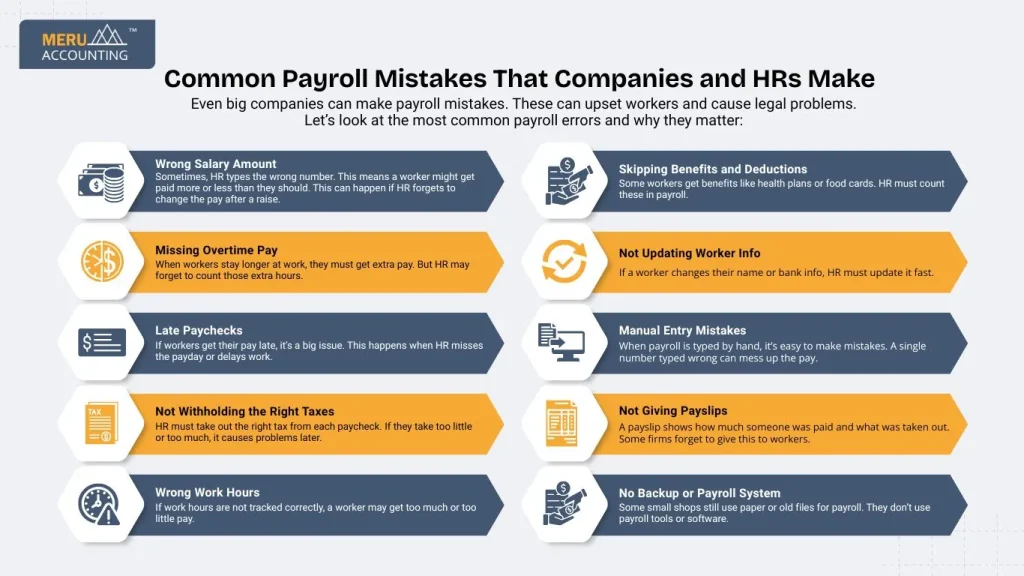
6. Skipping Benefits and Deductions
Some workers get benefits like health plans or food cards. HR must count these in payroll.
Why it matters:
If skipped, the pay will be wrong. It also causes tax issues and confuses the worker.
7. Not Updating Worker Info
If a worker changes their name or bank info, HR must update it fast.
Why it matters:
If not updated, the pay might go to the wrong place. It also causes problems with tax forms.
8. Manual Entry Mistakes
When payroll is typed by hand, it’s easy to make mistakes. A single number typed wrong can mess up the pay.
Why it matters:
This is one of the most common mistakes. It causes wrong pay and wastes time fixing the problem.
9. Not Giving Payslips
A payslip shows how much someone was paid and what was taken out. Some firms forget to give this to workers.
Why it matters:
Without a payslip, workers may not know what they were paid for. It also breaks labor rules in many places.
10. No Backup or Payroll System
Some small shops still use paper or old files for payroll. They don’t use payroll tools or software.
Why it matters:
If papers are lost, there is no proof of payment. Payroll tools help fix this. They save time and cut down on mistakes.
How to Avoid Payroll Mistakes
Making payroll mistakes can cause big problems. But don’t worry, here are some easy ways to stop common payroll errors:
- Use Payroll Software
Payroll software helps you do the math right. It fills in info fast and keeps things neat. This helps stop common payroll errors like wrong pay or taxes. - Keep Worker Info Up to Date
If a worker moves or gets a raise, update their record. Wrong info can cause payroll mistakes like paying too little or too much. - Track Time the Right Way
Use time tools or apps to track hours. This stops mix-ups and makes sure all workers get the right pay. - Check Pay Before Sending
Before sending out pay, look it over. A quick check helps catch payroll mistakes like wrong hours or missed bonuses. - Train Your HR Team
Laws about pay can change. Teach your team so they know the new rules. This helps stop legal trouble from common payroll errors. - Outsource Payroll to Experts
Outsourcing payroll means trained people handle it for you. This saves time, cuts down on payroll mistakes, and keeps things legal and smooth.
Payroll mistakes don’t have to happen. Meru Accounting makes sure your payroll is smooth, safe, and stress-free.
Impact of Payroll Mistakes on Businesses
- Loss of Staff Trust
Repeated payroll mistakes can make staff feel ignored. This can cause high staff exits if the issue is not fixed fast. - Legal Fines
Wrong tax cuts, late PF or ESI deposits, or missed filings can bring fines and legal trouble. - Extra Workload
Fixing payroll errors takes more time and effort. HR and accounts may need to redo pay, send new slips, and check bank records. - Low Work Output
Staff upset about pay may lose focus, leading to less work done. - Harm to Brand
Bad news about payroll can harm your name and make it hard to hire. - Cash Flow Issues
Extra or double pay due to errors can hurt cash flow and planned budgets.
Signs Your Payroll Needs an Upgrade
- Errors in pay slips, like wrong tax or allowance.
- Staff complaints about late or wrong pay.
- Missed tax or legal filing dates.
- Too much manual pay work.
- Payroll is not linked with HR or time tools.
- More time is spent on pay disputes.
If these signs are there, it’s time to move to a better payroll system.
Payroll Checks to Follow
- Check Staff Records
Collect and check PAN, Aadhaar, and bank details before paying. - Update Tax Rates
Keep tax and cut rates in payroll software up to date. - Meet All Legal Rules
Follow PF, ESI, Professional Tax, and labor law on time. - Keep Records
Store payroll records for at least 7 years. - Do Regular Checks
Run payroll audits often to catch and fix errors early.
Benefits of Right Payroll Work
- Happy Staff
Staff stay when paid right and on time. - Good Name
A strong payroll record builds trust and draws skilled staff. - No Fines
The right payroll helps meet legal needs and avoid fines. - Saves Time
Auto tools cut manual work and free HR for other jobs. - Better Budget
Correct data helps in budget and cash flow plans.
Tools That Help Avoid Payroll Errors
- Cloud Payroll
Work from anywhere with auto updates and links to HR tools. - Biometric Time Systems
Track work hours, overtime, and leave with more accuracy. - Auto Tax Tools
Apply correct tax cuts as per current laws. - Secure Pay Systems
Send salaries fast, safely, and with tracking. - Staff Self-Service
Let staff see slips, update data, and send claims on their own. - AI Payroll Reports
Find trends, spot errors, and plan payroll costs better.
Payroll mistakes are more common than you think. Even a small error can lead to upset workers, legal trouble, or money loss. That’s why it’s important to watch out for common payroll errors and fix them before they hurt your business.
Companies and HR teams must check pay, track hours, update records, and follow tax laws. But this can be hard when you have so much else to do. That’s why many smart businesses work with experts like Meru Accounting.
Meru Accounting helps you do payroll the right way. With our help, you avoid mistakes, keep your team happy, and grow your business the right way.
FAQs
1. What happens if I pay my employee late?
If you pay late, your worker may lose trust or have money problems. In some places, you may also have to pay a fine or interest.
2. How can I fix a payroll mistake?
First, talk to the worker and explain. Then, correct the mistake in your records and pay what you owe. If it’s a tax mistake, talk to a payroll expert.
3. Do I need payroll software to avoid errors?
Payroll software helps a lot. It reduces manual work and tracks taxes, hours, and pay. It also keeps your records safe.
4. Should I outsource my payroll?
Yes, many companies do. It saves time and reduces risk. Experts like Meru Accounting handle everything and keep your payroll safe.
5. Is it okay to pay cash to my employees?
In most places, it’s better to pay by bank and give a payslip. Cash payments are hard to track and may break the law if not recorded correctly.