
Is Receivables Management Services a Scam or Legit? A Guide to Debt Collection Practices
Receivables Management Services is a name that often appears on credit reports or in collection notices. Many people feel stressed when they see this name. The first question they ask is simple: Is Receivables Management Services a scam or is it legit? This guide will explain the role of Receivables Management Services, how debt collection works, and what steps you should take if you get a notice. We will cover your rights, best practices, and common mistakes to avoid.
What are Receivables Management Services?
- Receivables Management Services is a debt collection agency.
- The company works with banks, lenders, and service providers to collect unpaid debts.
- They buy debt from creditors or work on behalf of companies.
- If you see their name, it means they believe you owe money.
Is Receivables Management Services Legit?
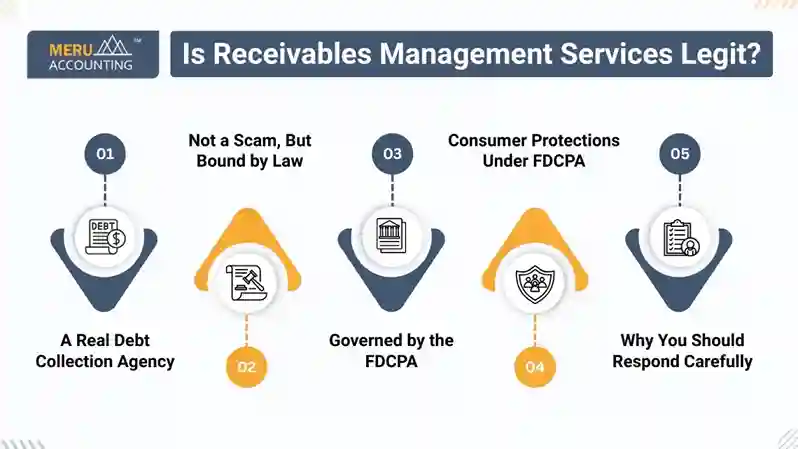
A Real Debt Collection Agency
Receivables Management Services (RMS) is a real debt collection agency. They work with creditors to recover unpaid debts from people and firms. Their main role is to help creditors collect what they are owed. Sometimes they act for the lender, and at times they buy the debt.
Not a Scam, But Bound by Law
RMS is not a scam. Still, like all debt collectors, they must follow debt laws. They cannot harass, scare, or mislead you to recover money. If you get a call or a letter from them, take it seriously. But remember, you also have rights as a consumer.
Governed by the FDCPA
Receivables Management Services must work under the Fair Debt Collection Practices Act (FDCPA). This law sets clear rules for debt collectors. It makes sure that people are treated in a fair way and not abused by harsh or unfair acts.
Consumer Protections Under FDCPA
The FDCPA gives you strong rights when dealing with RMS or any other debt firm:
- No Harassment – They cannot use rude or harsh words.
- Restricted Contact Hours – They cannot call before 8 a.m. or after 9 p.m. unless you agree.
- Right to Verification – You may ask for written proof of the debt.
- No False Claims – They cannot lie about the debt or act as if they are from the state.
- Right to Dispute – You can dispute the debt within 30 days of contact.
Why You Should Respond Carefully
If you ignore RMS, the debt may show on your credit file. This can lower your credit score or even lead to a court case. Always read their notice with care. Check if the debt is real and right. If it is, plan to pay or settle it. If it is wrong, you have the right to fight it.
Steps to Take if You Get a Notice From Receivables Management Services
1. Stay Calm
- Do not panic when you see their name.
- Many people face debt collection, and there are rules to protect you.
2. Check the Details
- Read the notice carefully.
- Confirm the creditor name, balance, and account number.
3. Ask for Validation
- Send a written request within 30 days.
- Receivables Management Services must send proof.
4. Review Your Records
- Check your bank statements and past bills.
- Compare the details with the notice.
5. Dispute if Needed
- If the debt is not yours, dispute it in writing.
- Keep copies of all letters.
6. Negotiate Payment
- If the debt is valid, you can ask for a payment plan.
- Sometimes you can settle for less than the full amount.
Using Receivables Management Services might help you challenge a debt that isn’t yours to pay.
If you get a collection notice for a debt that isn’t yours, you may write a dispute letter to Receivables Management Services.
- The agency must send a debt validation letter to validate the debt.
- Debt collectors will have to prove that you owe them money.
- Because of the debt’s persistence (that is, it is still within the statute of limitations in your state).
- The original creditor has authorized them to collect the loan debt.
Contact your state attorney general’s office or a private attorney to explore your options if they don’t meet your expectations. You have rights under federal law, and debt collectors who abuse those rights may be held accountable.
Can Receivables Management Services work out a settlement if they can’t pay?
It’s difficult for some clients to decide whether to attempt to work out a deal with a debt collection agency or pay the fine. If you pay the collection account, it will be on your credit report for a maximum of seven years. Your credit score will suffer if you have anything like this on your record. Do not pay unless you are particular about the debt and the debt collector has shown proof of power to collect with Accounts Receivable Management.
Additionally, it’s essential to remember that debt collectors may be brutal. Debt settlement payment plans may cost you more than expected if you don’t read the fine print. Finally, you may pay the company to remove the tradeline from your report for a monetary payment. Keep a copy of this agreement and your expenses in writing. If a debt collector ever asks for access to your bank account, refuse.
The best-case scenario is to successfully dispute the debt if it isn’t yours or you aren’t responsible for it. Lexington Law does not represent you in debt settlement negotiations, so you may need to hire a local attorney to assist you.
Common Mistakes People Make With Receivables Management Services
- Ignoring the notice and hoping it goes away.
- Paying without confirming the debt is valid.
- Talking on the phone but not keeping written records.
- Giving bank details without a written agreement.
Role of Accounting Firms in Receivable Management
Keeping Records Organized
Accounting firms maintain accurate financial data.
Early Follow-Up
They remind clients before accounts become overdue.
Legal Compliance
They ensure collection practices meet all rules.
Reducing Disputes
Proper management lowers the chance of disputes with agencies.
Support for Businesses
Meru Accounting offers receivable tracking, collection support, and financial planning.
How Receivables Management Services Affects Your Credit Report
Reporting to Credit Bureaus
Receivables Management Services (RMS) can report unpaid debt to the main credit bureaus: Experian, Equifax, and TransUnion.
Impact on Credit Score
When a debt goes to collections, it can drop your credit score fast, more so if it is new.
Status Updates After Payment
If you pay or settle, the account may show as “paid collection” or “settled.” This looks better than unpaid, but it still lowers your score.
Aging of Debts
Most collection debts stay on your credit report for 7 years from the first missed due date. After that, they drop off.
Effect on Loan Approvals
A collection on your file may block you from loans, credit cards, or home loans until you fix it.
Tips to Handle Calls From Receivables Management Services
Stay Calm and Polite
Keep cool when you speak with them. Do not yell or fight, as it can make things worse.
Request Debt Validation
Do not admit to the debt. Ask for proof in writing first.
Ask for Written Communication
Tell them to send letters, not just calls. It is safer and gives you a record.
Maintain a Call Log
Write down the date, time, and name of the caller. Keep notes of what was said.
Protect Personal Information
Do not share your Social Security number or bank info over the phone.
Set Boundaries
If calls are too much, ask them to write to you only.
How to Remove Receivables Management Services From Your Credit Report
Pay the Debt in Full
If you owe the money and can pay, clear it to close the case fast.
Negotiate a Settlement
If you cannot pay all, try to settle for less. Get it in writing.
Request a Pay-for-Delete Agreement
Ask if they will delete the account if you pay. Not all will agree, but some may.
Dispute Inaccuracies
If the debt is wrong, file a dispute with the credit bureaus.
Wait for the Debt to Expire
If it is close to 7 years old, it may fall off soon without action.
Seek Professional Help
Hire a credit repair firm or money advisor if you need help.
Can You Ignore Receivables Management Services?
Negative Consequences of Ignoring
If you ignore RMS, they may keep reporting your debt, which hurts your score.
Risk of Legal Action
They may sue you in court. This could lead to wage cuts or liens.
Importance of Responding
You must reply in writing within 30 days of notice to guard your rights.
Communication Control
Even in dispute, keep clear notes and written proof of all talks.
Legal Rules That Receivables Management Services Must Follow
Compliance with FDCPA
They must obey the Fair Debt Collection Practices Act (FDCPA).
No Harassment or Threats
They cannot scare, curse, or harass you.
Respect for Communication Preferences
If you ask for letters only, they must stop calls.
Statute of Limitations
They cannot collect if the debt is past your state’s time limit.
Honest and Accurate Information
They must give true, clear facts about the debt.
Right to Validation
You can ask for proof of debt in writing within 30 days of their first contact.
How to Protect Yourself From Scams Using the Name Receivables Management Services
Beware of Imposters
Scammers may use the RMS name to trick you.
Request a Written Notice
Ask for a letter that proves the debt is real.
Avoid Unsafe Payment Methods
Do not pay with gift cards, wire, or crypto. Those are scam signs.
Verify Directly
Call RMS from their real site or office to check the debt.
Report Suspicious Activity
Report scams to the FTC, CFPB, or your state AG.
Monitor Your Credit Report
Check your credit reports often to spot fake debts or errors.
Practical Tips for Dealing With Any Debt Collector
Know Your Rights
Learn what the law says before you talk with them.
Request Proof of Debt
Never pay unless you get proof first.
Use Certified Mail
Send letters by certified mail to keep a record.
Keep Copies of Everything
Save all emails, letters, and deals in a safe place.
Get Payment Confirmations
Ask for proof of payment or receipt each time you pay.
Create a Budget Before Paying
Make sure the deal fits your money plan. Do not pay more than you can.
Consider Negotiating Interest
Ask if they will drop late fees or interest if you pay.
Seek Legal Advice if Needed
If sued or if the debt is big, talk to a lawyer who knows debt law.
Receivables Management Services is a legitimate debt collection agency. They are not a scam, but mistakes can happen. Always confirm the debt, know your rights, and act wisely. Handling debt the right way can protect your credit and peace of mind. At Meru Accounting, we support clients in managing receivables and collections with accuracy and care. Our team ensures that accounts are well-maintained, disputes are minimized, and compliance is followed at every step. With expert accounting services, you can avoid unnecessary collection issues and stay financially secure.
FAQs
- Is Receivables Management Services a real company?
Yes, it is a legitimate debt collection agency. - Why are they contacting me?
They believe you owe a debt to a creditor or lender. - Can Receivables Management Services sue me?
Yes, if the debt is valid and unpaid, they may file a lawsuit. - How can I remove them from my credit report?
You can pay, settle, or dispute errors with proof. - What if the debt is not mine?
Dispute it in writing and ask for validation. - Should I talk to them on the phone? You can, but always ask for written proof first.
- Can I ignore Receivables Management Services?
No, ignoring them can hurt your credit and may lead to legal action