
Why Real Estate Accounting is More Complex Than You Think: A Deep Dive into the Challenges
Real Estate Accounting is generally more complex than it seems at first. With its unique challenges and exceptional problems, there is a requirement of specialized knowledge and expertise. This complicated system involves factors such as property management costs, multiple revenue streams and ever-evolving tax laws. In order to maintain records, Real estate businesses must track a broad array of financial activities like rental income, property sales, maintenance expenses and depreciation.
Real estate bookkeeping includes recording and management of all the financial transactions related to real estate activities covering capital expenditures, loan payments, asset disposal, construction costs, advertisement expenses, agent commission, utilities and operational costs. It assures accurate tracking of financial data, compliance with regulations and proper allocation of costs like depreciation and capital expenditures.
Table of Content
- Real Estate Accounting
- Understanding the Complexities of Real Estate Accounting
- Challenges Faced in Real Estate Accounting
- Conclusion
- Frequently Asked Questions (FAQs)
- Summary
Real Estate Accounting
Real Estate Accounting is a professional domain that revolves around the management of various aspects of real estate financial transactions, property investments and development projects. These include tracking income, expenses, taxes and the valuation of real estate assets. There are major differences between Real Estate Accounting and general accounting mainly because of the unique nature of the real estate industry, such as handling rental income, depreciation of properties and managing multiple portfolios or properties.
Real estate bookkeeping is a primary part of real estate accounting. It concentrates on the accurate recording and organization of daily financial transactions, including tracking rental income, property sales, maintenance costs, utility payments, and other operations expenses. Well-documented financial data can be ensured by effective real estate bookkeeping, ensuring accurate and timely financial reporting. It plays a vital role in preparing for audits, identifying cash flow patterns and compliance with tax regulations. Businesses leveraging real estate bookkeeping have a solid foundation for strategic decision-making and long-term profitability in the industry, as they have organised and up-to-date financial records.
When combined, real estate accounting and real estate bookkeeping form an extensive financial management framework for the real estate industry. With bookkeeping focusing on maintaining records of daily financial transactions, accounting concentrates on interpreting this data and providing strategic insights and ensuring compliance with regulations. This collaboration between real estate accounting and real estate bookkeeping ensures maintenance of accurate records, preparation of detailed financial statements and meeting respective tax obligations.
Understanding the Complexities of Real Estate Accounting
1. Project-Based Accounting for Development
- Managing and tracking costs for construction or development projects.
- Managing milestone billing and ensuring cash flow during the development phase.
2. Revenue Recognition and Leasing
- Tracking rental income, lease agreements, and payment schedules.
- Properly recognizing revenue from property transactions and leases.
3. Cash Flow Management
- Distinguishing between operating and financing income for accurate financial reporting.
- Ensuring liquidity by managing accounts payable and receivable, including rent collection.
4. Capital Expenditures (CapEx) Management
- Tracking large expenditures for property improvements and upgrades.
- Ensuring proper capitalization and depreciation of capital expenses to align with tax regulations.
5. Budgeting and Forecasting
- Preparation and revision of project budgets to ensure staying within financial limits.
- Forecasting future revenues and expenses for strategic planning and investment decisions.
6. Property Valuation and Depreciation
- Determining the right market value of real estate properties.
- Administering depreciation schedules for tax purposes to reduce tax liabilities.
7. Tax Compliance and Regulations
- Maintaining compliance with local property tax laws and accounting for tax liabilities.
- Knowledge and application of real estate investment regulations, including 1031 exchanges and capital gains.
8. Property Maintenance and Operating Expenses
- Managing ongoing operational costs such as utilities, repairs, and maintenance.
- Distribution of operating costs over different properties to ensure the accurate profit margin.
9. Investor and Shareholder Reporting
- Preparing financial reports for investors and shareholders to ensure transparency.
- Dividends or profits should be distributed as well as following partnership or shareholder agreements.
10. Risk Management and Insurance Accounting
- Accounting for insurance premiums and claims about properties.
- Identification of potential risks and ensuring that both properties and tenants are sufficiently insured.
Challenges Faced in Real Estate Accounting
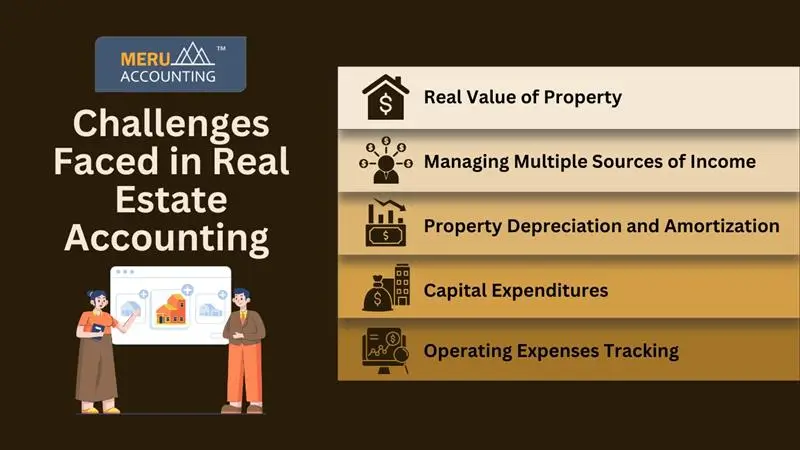
Real estate accounting is also governed by very complex tax laws regarding property taxes, income tax laws, and sales tax. Such laws are site-dependent and property-based. These complexities are major challenges for a property owner or manager in its compliance.
- Real Value of Property
Property valuation is at times required both for financial reporting and for tax purposes. The value of the property may fluctuate with market conditions and therefore can be challenging to value correctly and in time.
- Managing Multiple Sources of Income
Many real estate businesses earn various sources of income, including rental income, property sales, and capital gains. It is challenging to track and class such an income source, especially for large portfolios.
- Property Depreciation and Amortization
The depreciation of real estate assets over time is a matter that requires minute details for appropriate tax schedule planning. In addition, the amortization of cost pertaining to improvements and intangible assets may increase complexity in financial reporting.
- Capital Expenditures
Capital expenditures refer to the investment made for improvement or maintenance of the real estate properties. Accurate recording, proper allocation, and depreciation of expenses are critical in financial reporting as well as filing taxes.
- Operating Expenses Tracking
Other overhead expenses, like maintenance, property management fees, utilities, and insurance, have to be recorded. If they are not tracked, the chances of wrong financial reports and the lost opportunities to save on cost increase.
Conclusion
Real estate accounting is complex and needs experts to handle it well. It involves managing different income sources, property values, depreciation, and taxes. Meru Accounting helps businesses simplify these tasks with accurate bookkeeping and smart financial management. We make sure your cash flow is optimized, risks are reduced, and you have the right tools for better decision-making.
Frequently Asked Questions (FAQs)
- Why is real estate accounting more complex than traditional accounting?
Ans: Real estate accounting involves managing various revenue streams, property depreciation, and complex tax laws, requiring specialized knowledge.
- What makes property valuation and depreciation challenging in real estate accounting?
Ans: Property valuation fluctuates with the market, and depreciation requires accurate management to stay compliant with tax laws.
- How is real estate bookkeeping different from regular bookkeeping?
Ans: Real estate bookkeeping focuses on industry-specific tasks, such as managing rental income, tracking property expenses, calculating depreciation, and handling multiple property portfolios.
- How do multiple income streams impact real estate accounting?
Ans: Different income streams like rental income and sales must be tracked separately and accurately reported for tax compliance.
- How does Meru Accounting help with real estate accounting?
Ans: Meru Accounting provides specialized solutions for property valuation, depreciation, tax compliance, and financial reporting.
- How does project-based accounting impact real estate businesses?
Ans: Development projects have unique budgets and timelines, requiring precise tracking to avoid cost overruns and maximize profits.
- Can real estate accounting software help with these complexities?
Ans: Yes, real estate accounting software automates tasks, reduces errors, and streamlines financial reporting for better efficiency.