5 Tax Planning Strategies for an Efficient Tax Season
Tax planning plays a key role in how much you save during tax time. With the right steps, you can cut your tax bill, lower stress, and manage money better. By learning and using smart tax tips, you can handle tax time with more ease and confidence. This blog guides you through the process, from simple planning steps to expert help, and shows how a tax expert can make things easier for you.
Introduction to Tax Planning for an Efficient Tax Season
Tax Planning Strategies mean making smart choices all year to reduce the tax you owe. It is not just a once-a-year task; it is a habit that builds up to big savings. A clear tax plan helps you avoid stress and errors near deadlines. It also gives you more control over your money, whether you are an individual or a small business owner.
Good Tax Planning Strategies help you use all legal ways to save. You can cut taxable income, claim deductions, and avoid penalties. In short, smart planning makes tax season smooth and efficient.
Understanding the Basics of Tax Planning
Before diving into Tax Planning Strategies, you need to know what tax planning means. It is about understanding your income, expenses, and tax rules so you can make smart moves. Good planning means you keep more of your hard-earned money.
What Makes Tax Planning Important
Tax Planning Strategies are not only about paying less tax. They are also about managing money wisely. It helps you:
- Use deductions and credits that fit your situation.
- Avoid mistakes that cause penalties.
- Plan for big financial goals.
How It Works
It works by looking at your yearly income and expenses, then deciding the best steps to cut taxes. For example, you can choose when to report income or delay expenses to lower your taxable income. You can also invest in accounts that give tax benefits. This kind of planning leads to better financial health in the long run.
Why It Pays to Plan Taxes Early
Waiting until April to think about taxes often means missing savings. Many breaks disappear if you try to claim them too late. Starting early gives you more control and keeps you from paying more than you should.
Extra Time to Get Organized
When you start months ahead, you’re not scrambling for bank slips, invoices, or receipts. You can double-check records and avoid missing a document that might save you hundreds or more at tax time.
Spotting Deductions Before It’s Too Late
Some write-offs only work if you track them as you go. For example, a big medical bill or charity gift could cut your tax bill. If you wait until the deadline, you may forget about them or lack proof to claim the benefit.
Staying Ahead of New Tax Rules
Laws change all the time. By looking at your tax picture early, you have time to adjust or maybe claim a new credit or change how you spend, so you don’t miss out.
Filing Without the Panic
Getting your finances in order early means you won’t be rushing through forms at the last minute. Less stress, fewer errors, and no penalty notices showing up later.
Early Tax Planning Strategies also keep you stress-free. You know what to expect and avoid sudden surprises. It gives you time to talk to a tax expert if needed and find the best plan for your case.
Factors to Consider Before Applying Tax Planning Strategies
Tax planning is not standard for all. Several factors affect how you apply Tax Planning Strategies.
Your Income Sources
Where your money comes from matters. Salaries, business earnings, investments, and rental income are taxed differently.
Your Tax Bracket
The tax bracket you fall into decides your tax rate. Smart planning can help you stay in a lower tax bracket or use deductions to reduce taxable income.
Available Deductions and Credits
Different expenses give you tax relief. It could be medical bills, education costs, or charity donations. Knowing what applies to you helps in making the right moves.
5 Smart Tax Planning Moves to Keep More of Your Money
You should not pay more tax than you must. A smart Tax Planning strategy can help you keep cash in your pocket and stay calm at tax time. Try these five simple tips to lower what you owe.
Look Beyond the Obvious Deductions
Most people only claim the basics, but there are plenty of other deductions and credits you might qualify for. Keep track of things like medical bills, school expenses, and even home office costs. If you’re making energy upgrades to your house, you may also get credits for that. Every dollar you document is a dollar that doesn’t go to the taxman.
Small Business Owners: Use the QBI Deduction
If you run a small shop, freelance, or have your own firm, you may be able to claim the Qualified Business Income (QBI) deduction. This tax break lets you remove up to 20% of your business earnings before tax is figured. The IRS has strict income limits and rules, so it’s best to check where you stand early in the year. Missing this step could cost you thousands.
Put More into Retirement Accounts
Think of contributions to a 401(k) or IRA as paying yourself first. Not only does this money grow for your future, but it also reduces the income the IRS taxes today. Even a small increase in contributions before year-end can save you hundreds in taxes.
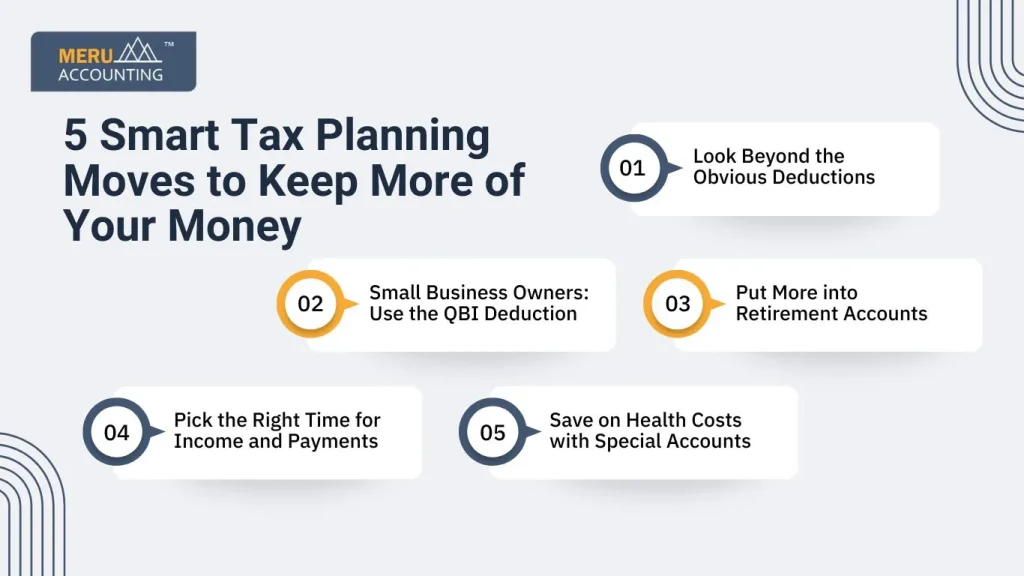
Pick the Right Time for Income and Payments
Tax bills don’t just depend on how much you earn; they change based on when you earn or spend money. Say a client wants to pay you in late December. If you don’t need the money right away, you could ask them to pay in January instead, pushing that income into the next tax year. The same goes for bills, Paying certain expenses early, like office rent or equipment costs. This can reduce this year’s taxable income.
Save on Health Costs with Special Accounts
Health costs add up. An HSA or FSA lets you set aside money before tax. You spend it on care and pay less tax at the same time.
How the QBI Deduction Helps Small Businesses
Running a small business already comes with enough costs. The last thing you want is to pay extra tax when there are legal ways to cut the bill. One of the biggest breaks for owners of small firms and freelancers is the Qualified Business Income (QBI) deduction. Used right, it can keep thousands in your bank account instead of sending it to the IRS.
What the QBI Deduction Really Means
In plain terms, QBI lets many self-employed people knock off up to 20% of their earnings before tax is calculated. Say your design studio made $80,000 in profit last year—you could remove up to $16,000 from taxable income. But here’s the catch: not all income counts, and there are rules you can’t ignore.
Making the Most of QBI
Some business owners lose this deduction simply because they didn’t plan early enough. The IRS has income limits and specific filing rules. A tax pro can help you set things up the right way, like how you pay yourself, or how you report expenses to keep you under those limits and claim the full deduction.
Costly Mistakes I See Often
I’ve watched plenty of small firms lose money on taxes for avoidable reasons:
- Bad record-keeping: Tossing receipts in a drawer or not logging costs properly.
- Late filings: Missing the deadline for contributions or returns.
- Skipping smaller deductions: Things like a home office, extra medical bills, or school fees often get overlooked.
- Not tracking law changes: A new tax credit may come in, but if you don’t hear about it, you miss out.
- Last-minute planning: Trying to do everything a week before April 15 is a recipe for errors and stress.
Role of a Professional Accountant in Tax Planning
An accountant can make Tax Planning Strategies much easier. They know the rules, track changes in laws, and help you find every chance to save.
Why You Need Expert Help
- To avoid costly mistakes.
- To get advice tailored to your income and goals.
- To make the best use of deductions and credits.
With professional help, you can focus on your work or business while they handle the tax details for you.
Tax planning is not just for tax season, but it’s a year-round process that helps you save more on taxes. By using the five tips above, you can lower your tax bill, reduce stress, and stay in control of your finances. If you own a small business, taking full advantage of the QBI deduction can further boost your savings.
At Meru Accounting, we help people and firms to plan taxes the right way. Our team shows you clear steps to save money while staying safe and within the law.
FAQs
- What is tax planning, and why should I care?
It is about managing your money so you don’t pay more tax than you need to. It matters because it saves you cash, keeps you out of trouble, and helps you avoid costly errors. - How often should I check my tax plan?
Once a year is a good rule, but check it sooner if you change jobs, make a big investment, or buy a new property. - What is the QBI deduction, and who can claim it?
The Qualified Business Income (QBI) deduction lets many business owners knock off up to 20% of their qualified earnings, lowering their taxable income. - Can I plan taxes on my own?
Yes, you can handle basic planning yourself. But having an expert often means you find more savings and avoid mistakes that could cost you later. - What mistakes should I avoid when planning taxes?
Late filing, weak record keeping, and missing rule changes are the top reasons people lose money or face penalties.